
Why I am Hopeful About the Advisory Council on Parkinson’s Research, Care, and Services
It's not just about eliminating Parkinson's.

Last week I forwarded some information about the ACPRCS Unfortunately, I hit send before I was finished and may have given you some of the wrong information. After looking at everything again, I thought I should share my insights on the meetings.
The Advisory Council on Parkinson’s Research, Care, and Services (ACPRCS) met last week for the first time. The Council is a federal advisory committee created by the National Plan to End Parkinson's Act. This act, led by former US Representatives Gus Bilrakis and Jennifer Wexton, who has Progressive supranuclear palsy (PSP), which was signed into law almost exactly 2 years ago, calls for an integrated national plan to prevent, diagnose, treat, and cure Parkinson’s, ameliorate symptoms, and slow or stop progression. Those are lofty goals.
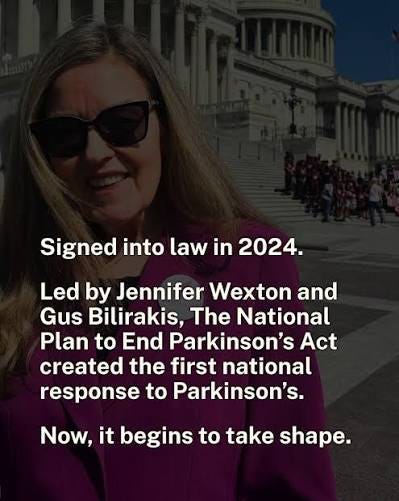
The 23-member body was set up to advise the U.S. Department of Health and Human Services (HHS) to accelerate research, improve clinical care, enhance support for caregivers, and build the first-ever National Plan to End Parkinson's. [1, 2, 3] The formation of the Council was announced last year and as usual in Government, it took a long time to announce the members of the council and set up the first meeting.
I know that many of you feel that the ACPRCS will just be another instance of bureaucratic posturing. Nothing will come of this and it is a waste of time and money. That is the wrong way to look at this.
‘Nothing about us without us’
Let’s go back to the 1980’s when the AIDS pandemic was raging. Activists took it upon themselves to demand and secure a meaningful role for people living with aids in all areas of the research process. They became self-trained experts and lobbyists, literally forcing the pharma industry, US government(HHS), funding and regulatory agencies to fast-track their response to the epidemic. Nothing about us without us became their mantra. Unfortunately it took many years to accomplish their goals, but they have paved the way for us and other disease advocacy groups to work effectively with the government to actually get something done.
Can we eliminate Parkinson’s?
I don’t think so. It is going to take years to remove the toxic chemicals from the environment. Our numbers may go down significantly but I doubt that PD will be eliminated completely. We also need to acknowledge that the number of people with genetic PD is also increasing as new gene mutations are discovered. The good news for that group is that some inroads are being made for effective gene therapy.
What is the benefit of all this for those with PD?
For the first time, those of us in the Parkinson’s community have a voice on a National level. I know, I know, the Fox Foundation goes to Washington to lobby Congress. That’s great and there is even a Parkinson’s Coalition in Congress that your Senators and Representatives can sign on to. But as much as we think they will be educated about PD and rush to pass bills to help us, it’s just not going to happen. The difference here is that the ACPRCS includes people living with Parkinson’s, caregivers, health care providers, researchers, advocacy organizations, and representatives from federal agencies. They know PD and some of the people involved may actually be in positions to make some changes at the Federal level.
A portion of each meeting is reserved for public comment. We are invited to speak up to voice our thoughts and concerns. Prior to each meeting of the ACPRCS full committee, NIH/HHS issues a Federal Register notice and an announcement on the ACPRCS website inviting members of the community to provide public comment for the Council’s consideration at the meeting. Go to the website for more information on how you can participate.
Visibility: There are many issues facing our community. With increased visibility within government agencies, I would hope that there will be increased awareness of the cost of Parkinson’s which is estimated to be $82.2 billion annually in the United States. Direct medical expenses average $18,859 per patient each year, while indirect costs—such as unpaid caregiving, lost wages, and home modifications—push the total economic toll to over $40,000 per patient annually. [1, 2]
Many people with PD are on fixed incomes and access to doctors, medications, therapy and other services can be difficult. We hear too many stories about some who need to choose between getting their medications and food. Once again, increased visibility in Federal agencies could lead to better benefits and better care, not just for People with Parkinson’s, but for others with chronic diseases who face the same issues.
The ACPRCS is required to hold 4 meetings a year. The next 3 meetings are August 24(virtual), November 9 (in-person and virtual) and December 7 (virtual). If you can, attend the meeting virtually and ask questions. All are recorded if you cannot join them live.
Nothing about us without us
I can’t emphasize this enough. We must continue to fight hard to be included in the research and decisions being made by our government. After all, we are the ones living with PD, and we must share our experience and knowledge to get the care that we need. For more information on how you can get involved, go to the Fox Foundation or Parkinson’s Foundation websites.
Sunday Mornings with Twitchy Woman
Sunday, July 12 at 1:00 PM ET, 10:00 AM PT
Several of our amazing Twitchy Women who attended the World Parkinson Congress for the first time last month will be joining me to talk about their experiences. What did they learn? What were some of the key takeaways from the Congress? Join us for a lively conversation about the WPC and what to look forward to in 2029 at the next WPC in Quebec City

We have to be loud. We have to make changes. It's never been a more important time to share our stories. This gives us the platform to do it. With Michael Okun on the council we have our best chance ever to make change happen. Only we can't leave it up to the big names to do it for us. Our voices are stronger together. It's time to unite and fight for our right to better care and a brighter future!